
Learning to kitesurf in Dakhla: how to choose your school and course
Published on July 12, 2026
Lesson hours, safety, equipment, certification and accommodation: the concrete criteria for choosing a first week of kitesurfing in Dakhla.
Why Dakhla attracts so many beginners
The lagoon offers large areas of relatively flat, shallow water, which makes some exercises easier. The frequent wind allows progression weeks to be organised, while the camps bring together accommodation, lessons and equipment. These advantages do not make learning instantaneous. Kitesurfing remains a sport where the kite develops considerable power and where safety comes before riding the board. A good school does not promise autonomy in a fixed number of days; it assesses the wind, your level, fatigue and your ability to apply the procedures. Browse the schools and water activities, then compare their method rather than their most spectacular videos.
The skills to learn before the waterstart
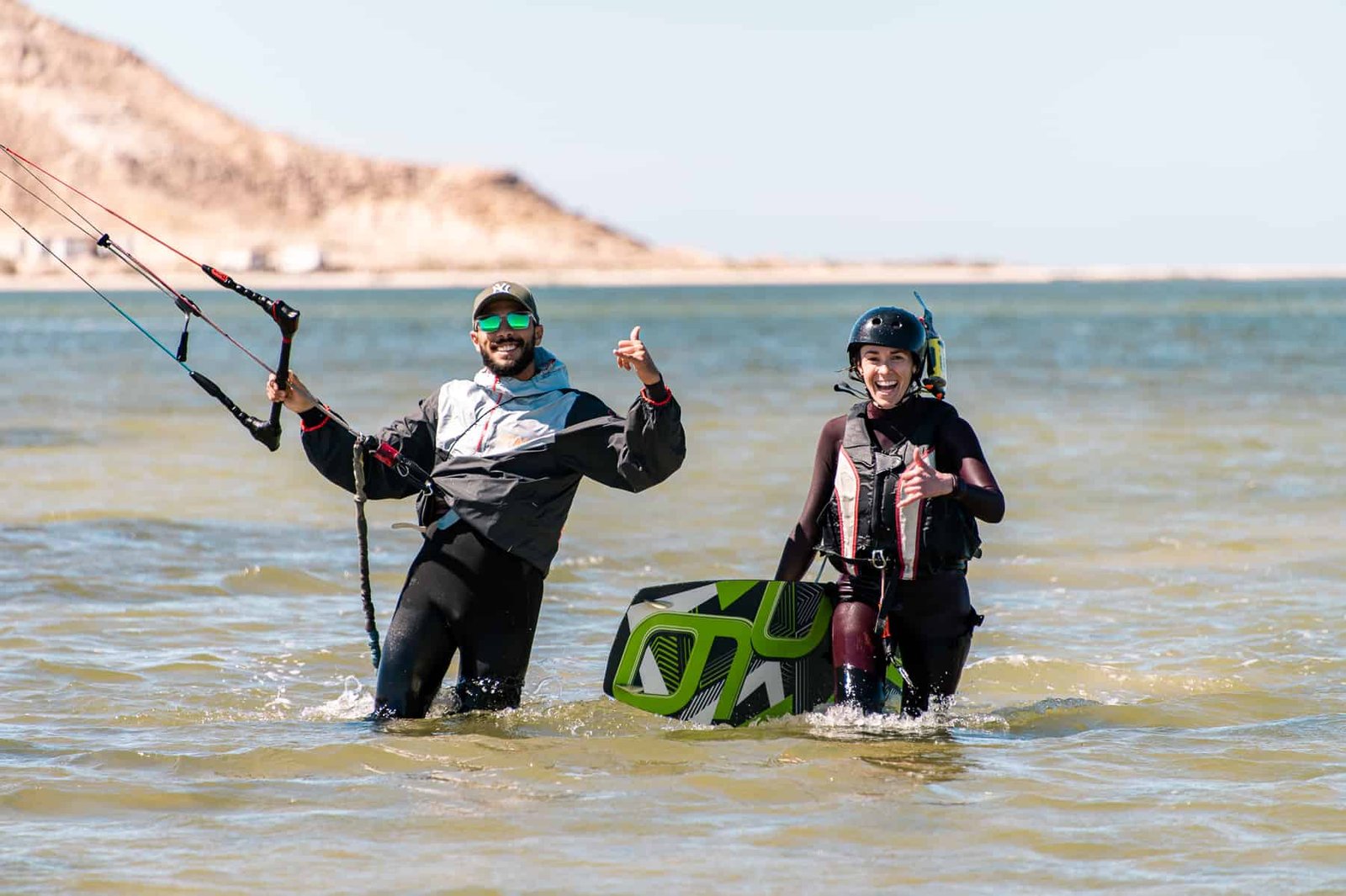
A serious lesson starts with reading the spot, the wind direction, rigging, checking the lines and using the release system. The student learns to hold the kite, move it along the edge of the wind window, assist a launch and react when a situation changes. Then come the body drag, board recovery and the waterstart. Ask whether the school assesses these steps and issues a documented level. Someone who briefly stands up on the board is not necessarily independent. They must also ride upwind, relaunch, keep their distance and come back without constantly depending on the boat.
Private, semi-private or group lessons
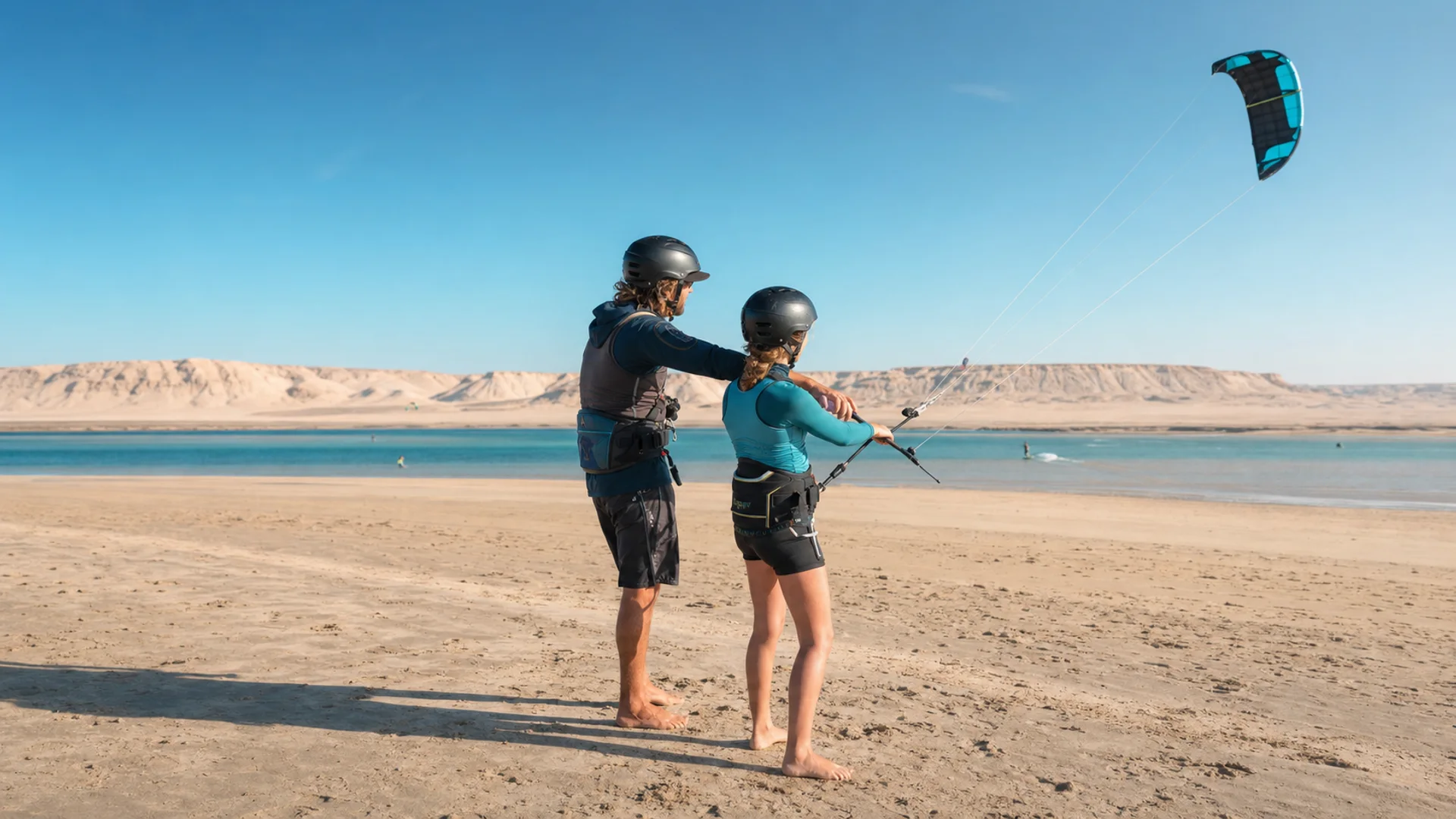
A private lesson maximises kite-flying time and lets the instructor tailor every exercise. Semi-private works well for two people of similar level and weight, provided you know whether they share a single kite. A larger group costs less, but active time can shrink and gaps widen. Compare the number of students per instructor, the number of kites and the time actually spent with the equipment. A twelve-hour package can mean twelve hours of group presence, not twelve individual hours. If you learn better in your own language, insist on its availability; a misunderstood safety instruction is not offset by an attractive price.
Equipment and safety to check
Helmet, impact vest, an appropriate board leash, wetsuit and a recent kite should all be inspected. Ask how the centre chooses the kite size, where the safety boat is and which conditions lead to a lesson being cancelled. The instructor must remain able to communicate, directly or by radio. Also watch the launch area: it should be organised, without beginners freely crossing other people's lines. A professional school is happy to describe its insurance, its certification and its emergency procedure. If the answer boils down to "everything is easy here", look for another team among listings such as Dakhla Kitboarding or the other centres in the directory.
Choosing between a school-hotel and separate accommodation
A camp on the spot simplifies scheduling: the instructor can adapt the session to the wind, you watch the others and the equipment stays stored on site. This immersion suits travellers who come mainly to learn. Staying in town offers more restaurants and sometimes a lower rate, but adds transfers and makes changing a slot harder. Compare the accommodation options and ask whether lessons are tied to a board package or can be bought separately. For a couple where only one person is learning, check the companion's activities. A pleasant week for the rider must not become seven days of waiting for the other.
How many days do you need to start?
A two-hour taster lets you understand the equipment and fly a kite, but rarely makes you independent. Three to five days offer more repetition and the ability to absorb a windless day. Progress depends on coordination, comfort in the water, the weather and the lesson format. Keep one rest day: shoulders, hands and concentration tire. Avoid booking non-refundable lessons every morning without knowing the weather policy. A good centre postpones or converts a session when conditions are not right, rather than sending an overpowered beginner out simply to keep a schedule.
The questions to send to three schools
Ask for the total price, the hours, the ratio, the languages, the equipment, the insurance, the certification, the weather policy and the level issued at the end of the course. Add your weight, age, swimming experience and any injuries. Compare the answers: their precision often reveals the quality of the organisation. Beware of autonomy guarantees and surcharges discovered after arrival. If you later travel with your own equipment, the services page and the camps calendar round out the preparation. For this first week, put safety and teaching first; choosing a kite brand or a highly photogenic bungalow comes later.
The beginner pathway described by an international reference
The Discovery course of the International Kiteboarding Organization puts spot assessment, equipment preparation, safety systems and kite control before the advanced steps. This progression is a useful grid for questioning a school, even one following another recognised certification. A logo is not enough: ask for the instructor's name and check that the method is applied on the water. A certificate describes a level reached, not an absolute guarantee. After the course, keep riding in suitable conditions, accompanied if necessary, and refuse independent rental if you do not yet master self-rescue.
Before confirming your programme
Practical information changes faster than the landscapes: schedules, prices, road conditions, tides and availability should be checked shortly before departure. Keep one flexible day, ask for written confirmations and avoid stacking several non-refundable services on the same day. Suitable insurance, an offline copy of your bookings and a reachable local contact bring more security than a minute-by-minute agenda. To round out this guide, browse the accommodation, restaurants, activities and useful services already vetted in the directory. You will easily replace a cancelled outing, choose a nearby address and keep time for what makes Dakhla charming: the light, the wind, the encounters and the sense of space. A realistic programme always leaves room for rest and the unexpected.
Finally, reread the programme as if you had to explain it to someone else: where does each day start, who provides the transport, which meal is planned and what is the fallback if the activity cannot take place? This check quickly reveals the grey areas. Keep the important contact details on your phone and on paper, tell your accommodation if you will return late and follow the local teams' instructions. In Dakhla, distances, wind and tide shape the organisation far more than in a classic urban destination. Planning for these constraints takes nothing away from the adventure; on the contrary, it frees up time and attention to enjoy the trip to the full.
Frequently asked questions
How many hours does it take to learn kitesurfing in Dakhla?
There is no guaranteed duration. A taster lasts a few hours; several days are usually needed to approach autonomy, depending on the wind and the student.
Is equipment always included?
Often during lessons, but not necessarily during free practice. Ask for the exact list and the insurance before booking.
Can you rent on your own after a first week?
Only if the school confirms sufficient autonomy. Managing a few starts does not replace riding upwind, relaunching and self-rescue.