
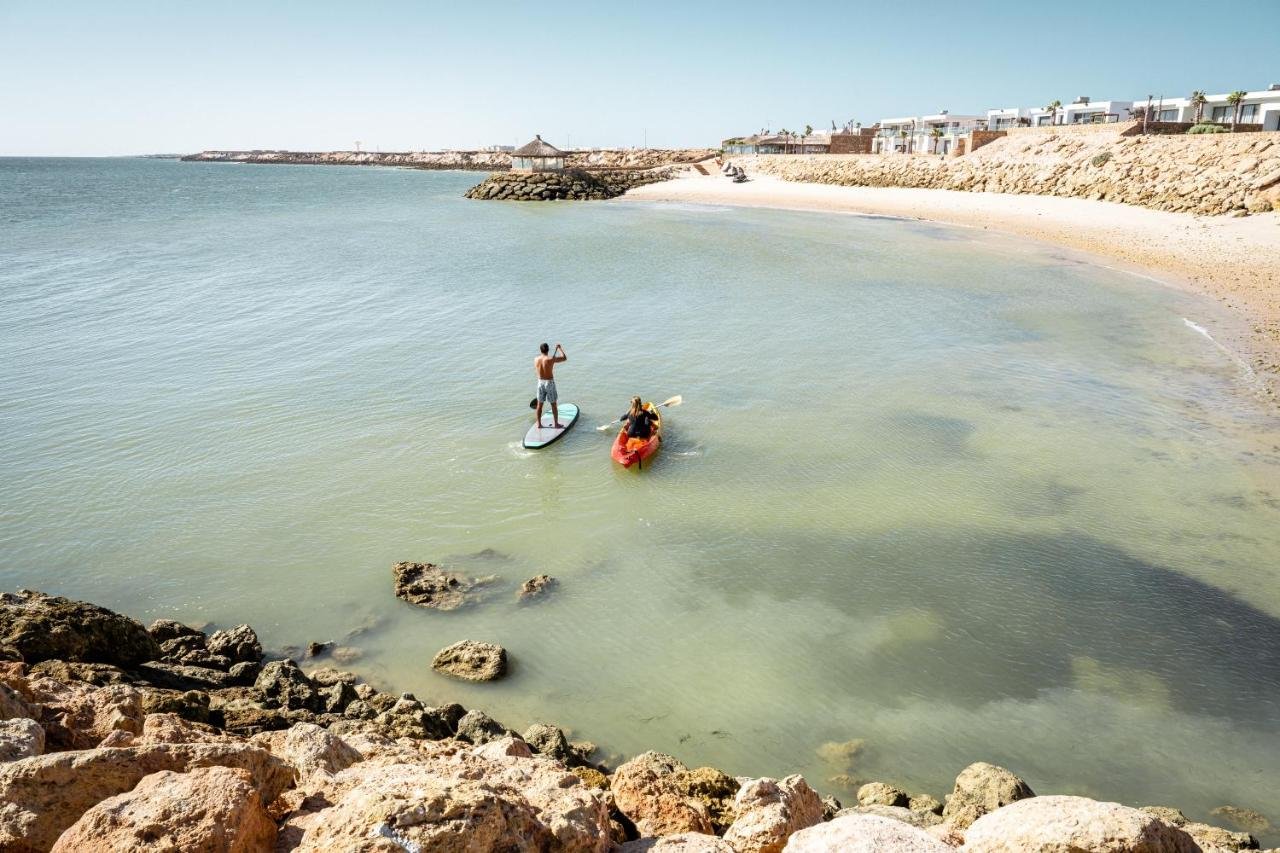
Where to watch flamingos, dolphins and birds in Dakhla without disturbing them?
Published on July 12, 2026
The best wildlife-watching settings in Dakhla Bay, with advice on tides, distance, guides and responsible photography.
A living bay, not an amusement park
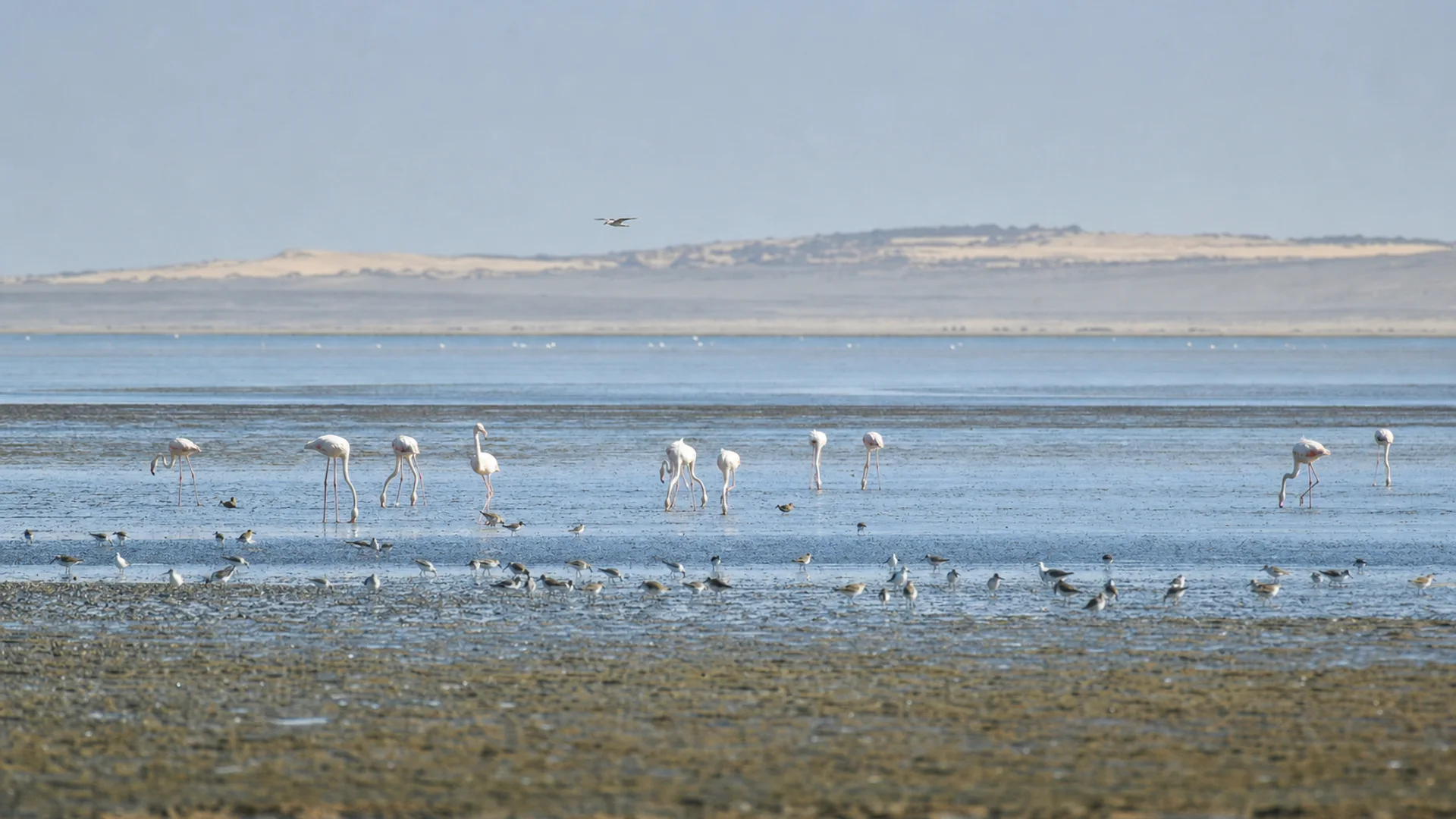
Dakhla Bay hosts migratory birds, waders, flamingos and several marine species. This richness naturally attracts visitors, but a successful observation is not measured by how close you get. An animal that flies off, changes direction or stops feeding has already spent energy because of your presence. Bring binoculars and accept that the wildlife stays small in the landscape. The best memories often come from a silent hour watching the tide's movements. The nature activities can provide a guide, provided you ask how they manage distances and group sizes.
The areas to favour
The edges of the lagoon, the intertidal zones and the southern tip of the peninsula offer different vantage points. Access changes with the tide, and some mudflats must not be crossed. A local guide knows where to stop without cutting through a feeding area. Dragon Island offers a view of the wider landscape, while Punta Sarga is often cited for marine wildlife and birds. Do not share the exact position of a nest or a vulnerable group in real time. If a site is closed, respect the barrier: protecting a roost matters more than the itinerary planned in your notebook.
Choosing the right moment with the tide
At low tide, large flats are exposed and the birds feed. As the tide rises, they gradually gather on higher ground. These movements make observation from a fixed point easier, without walking towards them. Ask the guide for the tide times and arrive early. Morning and late afternoon bring softer light and less heat, but the wind can persist. Dress in layers, protect your equipment from the sand and avoid very shiny clothing. A long lens or quality binoculars beat repeated approaches with a phone.
Boat trips and dolphin watching
A boat trip never guarantees the presence of dolphins. Be wary of a provider who promises contact or a close chase. The boat should slow down, hold a predictable course and let the animals decide the distance. Do not ask the skipper to cut across their path for a video. Check the number of passengers, the life jackets, the shade and the duration. A trip towards Dragon Island and the highlights can include wildlife watching, but its main purpose remains discovering the lagoon. This realistic expectation reduces the pressure on the crew and on the animals.
Photographing without causing birds to take flight
Set up the camera before approaching the observation point, switch off the sounds and avoid flash. Stay grouped rather than forming an arc around the birds. If an individual keeps raising its head, moves away or alerts the group, step back. Do not feed any animal to attract it. Drones disturb wildlife and may be subject to strict rules; do not use them without explicit authorisation. A photo with space around the subject tells the ecosystem's story better than a portrait obtained by crossing a line. Note the time, tide and behaviour in your notebook: these details give the images meaning.
Travelling with children or a small group
Explain before the outing that the goal is to find the animals without making them leave. Pass the binoculars around and turn the wait into a game of identifying silhouettes, colours and tracks. A noisy group can split up, but must never encircle the wildlife. Bring water, hats, a snack and plan a suitable duration: a tired child will struggle to stay still. For a family, combine an hour of watching with a beach or a lunch rather than a full day of searching. The Dakhla with kids page helps organise this pace.
Supporting a more respectful discovery
Choose a guide who knows the species, limits waste and refuses to leave the routes to satisfy a demand for proximity. Bring your own bottle, carry back every wrapper and collect neither live shells, nor feathers, nor plants. At the lagoon accommodations, ask which practices reduce night lighting and traffic in sensitive areas. Share photos accompanied by rules of respect rather than precise coordinates. Tourism can support knowledge of the bay if visitors pay for local expertise and accept that a day without a spectacular sighting is still a successful day.
Why the bay is internationally recognised
The summary from the Ramsar Information Service describes Ad-Dakhla Bay as a 61,010-hectare site important for migratory waterbirds, seagrass beds, fish, molluscs and the Atlantic humpback dolphin. This recognition is a reminder that the lagoon is a complex ecological environment, not just a tourist backdrop. Historical figures do not predict what you will see on a given day. Use them to understand the site's value, then follow local guidance, temporary closures and recommended distances.
Before confirming your programme
Practical information changes faster than the landscapes: schedules, prices, road conditions, tides and availability should be checked shortly before departure. Keep one flexible day, ask for written confirmations and avoid stacking several non-refundable services on the same day. Suitable insurance, an offline copy of your bookings and a reachable local contact bring more security than a minute-by-minute agenda. To round out this guide, browse the accommodation, restaurants, activities and useful services already vetted in the directory. You will easily replace a cancelled outing, choose a nearby address and keep time for what makes Dakhla charming: the light, the wind, the encounters and the sense of space. A realistic programme always leaves room for rest and the unexpected.
Finally, reread the programme as if you had to explain it to someone else: where does each day start, who provides the transport, which meal is planned and what is the fallback if the activity cannot take place? This check quickly reveals the grey areas. Keep the important contact details on your phone and on paper, tell your accommodation if you will return late and follow the local teams' instructions. In Dakhla, distances, wind and tide shape the organisation far more than in a classic urban destination. Planning for these constraints takes nothing away from the adventure; on the contrary, it frees up time and attention to enjoy the trip to the full.
Frequently asked questions
Can you see flamingos all year round?
Their presence and location vary with the seasons, the tide and the conditions. No serious guide should guarantee a specific sighting.
Does a boat trip guarantee dolphins?
No. The wildlife is free. Choose an operator who keeps its distance and does not chase the animals.
Can you use a drone?
Do not use one without checking the permits and protection rules. The noise and aerial approach can seriously disturb the birds.