
Dakhla in September: weather, wind and the complete packing list
Published on July 12, 2026
Temperatures, wind, cool evenings, wetsuit and sun protection: everything to plan for a stay in Dakhla in September.
September is still summery, but not in the same way
Dakhla in September combines pleasant temperatures, strong sun and a wind that can completely change how it feels. The traveller who packs only shorts risks being cold after a session or at dinner, while the one who imagines a scorching desert will carry useless clothes. The Atlantic's proximity limits the extremes and maintains a steady breeze. So think in layers: light clothing, sun protection and a windbreaker. Precise forecasts only have value a few days before departure; averages merely help build a versatile suitcase. Also check the September calendar if your dates coincide with a camp or an event.
Temperatures and how they actually feel
Days are generally mild to warm without systematically reaching the levels of Morocco's inland cities. The wind speeds up evaporation and feels cooler as soon as the sun drops. Pack breathable t-shirts, light trousers, a mid-layer and a jacket that genuinely blocks the wind. For the city, plan a modest, comfortable outfit; for the resort, clothes that dry easily. A light scarf protects from sand on a 4x4 outing. Do not neglect socks and closed shoes: they are useful in the desert, on the rocks and when the ground turns cold after sunset.
The wind: a sporting asset, a daily constraint
The wind made Dakhla's reputation, but it neither blows everywhere nor with the same strength at every hour. On the lagoon, it can complicate a terrace lunch, tire a young child or carry off a loosely attached hat. Bring a cap with a cord, a bag that closes and a jacket without flapping panels. Photographers protect their gear from the sand and avoid changing lenses facing the wind. A less windy day is not a lost day: it suits excursions, the city or a treatment at a wellness address. A flexible programme uses the weather instead of fighting it.
Which wetsuit for kite, surf or wingfoil?
The choice depends on the discipline, the time spent in the water, your sensitivity to cold and the spot. A full 3/2 wetsuit is often a versatile base, but ask the centre for advice a few days before arrival. Someone who spends long periods immersed during lessons can get colder than an independent rider in motion. Check whether the rental includes the wetsuit and which sizes are available. Add a rash guard, water-resistant sunscreen, lip balm and a small anti-chafing kit. The schools on the activities page can confirm the right equipment for their area, rather than a general rule applied to the whole coast.
Sun protection and hydration
The breeze reduces the feeling of heat but not the ultraviolet exposure. Pack filtering sunglasses, a hat, high-SPF cream and covering clothing. Reapply protection after the water and do not forget your hands or the tops of your feet. A reusable bottle helps you drink regularly; ask the hotel how it can be refilled with suitable water. For an excursion, leave with more water than necessary and avoid the middle hours if the programme allows an early or late departure. The signs of dehydration — fatigue, headaches, irritability — can look like simple travel weariness and must be taken seriously.
Packing list for seven days
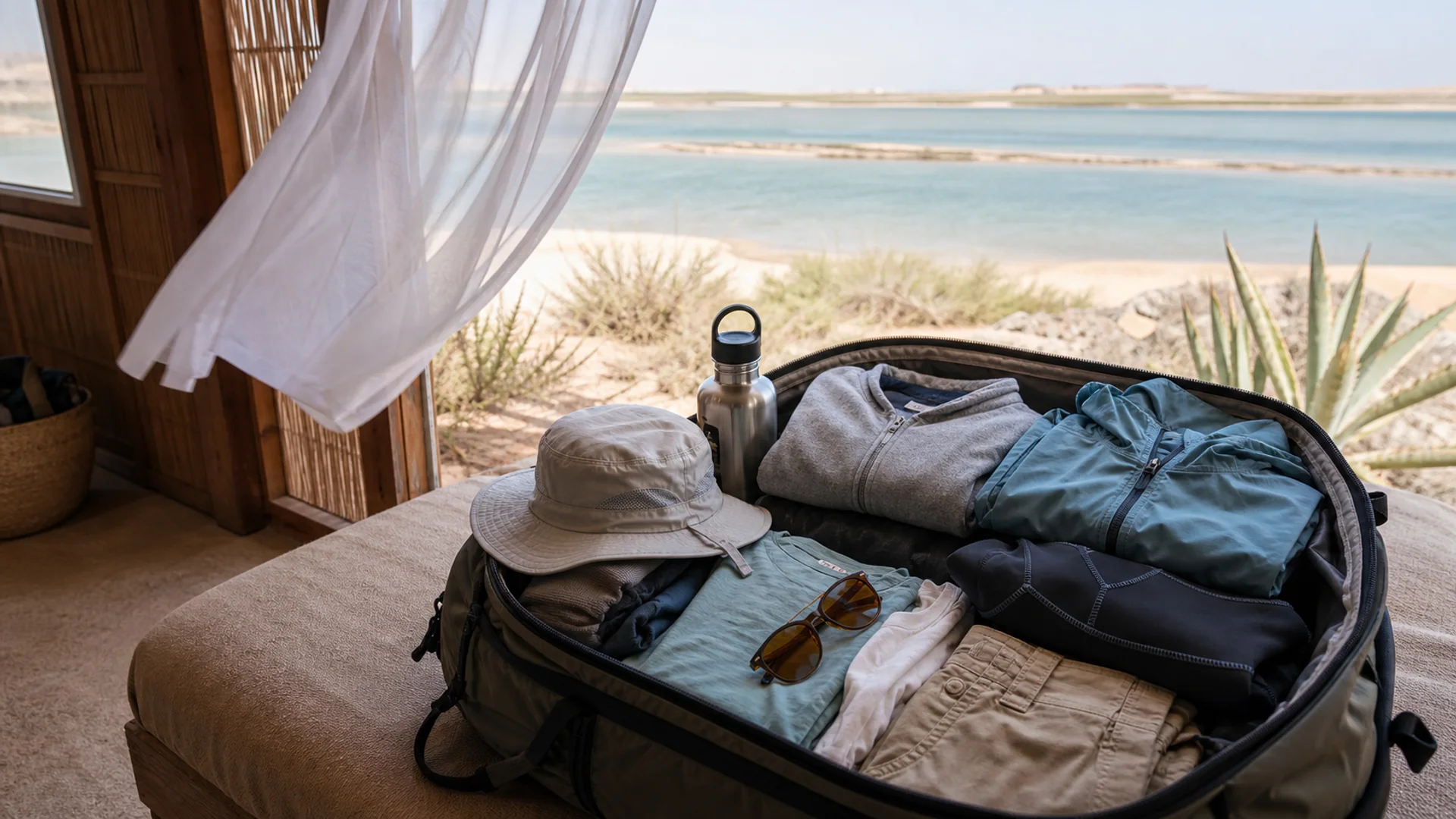
Plan four light tops, two bottoms, one city outfit, long trousers, a thin fleece, a windbreaker, closed shoes, sandals, swimwear, a compact towel and quick-drying underwear. Add a hat, sunglasses, sunscreen, a bottle, medication, copies of documents, a power bank and an adapter if needed. For sport: wetsuit, rash guard, booties depending on the centre and gloves only if you already use them. A small waterproof bag protects phone and papers. Do not overpack: several accommodations offer laundry. Keep one outfit, your medication and the essentials in your cabin bag in case the checked suitcase arrives later.
Preparing your kite luggage
Weigh the complete boardbag at home and measure its length. Remove the fins if the manufacturer recommends it, protect the rails and separate parts that could rub. Sharp tools and certain items must travel in the hold; batteries follow specific rules. Check the airline's conditions directly for your ticket, as an event may negotiate a different allowance from the general rule. Write your contact details inside and outside the bag. On arrival, photograph any damage immediately before leaving the baggage area. Renting on site can be cheaper than an excess-baggage fee, especially for a short stay.
What the climate averages show
The historical data from WeatherSpark describe a generally comfortable climate and a windier period extending to the end of September, with July the windiest month on average. They do not predict your week. Check an updated forecast before the flight and ask the watersports centre for its local observation. Gusts, tide and topography matter more than a monthly average when deciding on a session. A layered suitcase remains the most robust answer: it handles a cool morning, a sunny day and a windy evening without requiring three bags.
Before confirming your programme
Practical information changes faster than the landscapes: schedules, prices, road conditions, tides and availability should be checked shortly before departure. Keep one flexible day, ask for written confirmations and avoid stacking several non-refundable services on the same day. Suitable insurance, an offline copy of your bookings and a reachable local contact bring more security than a minute-by-minute agenda. To round out this guide, browse the accommodation, restaurants, activities and useful services already vetted in the directory. You will easily replace a cancelled outing, choose a nearby address and keep time for what makes Dakhla charming: the light, the wind, the encounters and the sense of space. A realistic programme always leaves room for rest and the unexpected.
Finally, reread the programme as if you had to explain it to someone else: where does each day start, who provides the transport, which meal is planned and what is the fallback if the activity cannot take place? This check quickly reveals the grey areas. Keep the important contact details on your phone and on paper, tell your accommodation if you will return late and follow the local teams' instructions. In Dakhla, distances, wind and tide shape the organisation far more than in a classic urban destination. Planning for these constraints takes nothing away from the adventure; on the contrary, it frees up time and attention to enjoy the trip to the full.
Frequently asked questions
Is it cold in Dakhla in September?
Days remain pleasant, but the wind and the evenings can feel cool. A light fleece and a proper windbreaker are useful.
Which wetsuit should you bring?
A full 3/2 is often versatile, but the centre should confirm according to the spot, the discipline and your sensitivity to cold.
Does it rain much in September?
Rainfall is generally limited, but averages are no substitute for a forecast checked a few days before the trip.